
Blog Posts
-
 Published on
My Journey in Cloud Engineering
Cloud computing has revolutionized the tech industry, and my journey into this field has been nothing short of transformative. From starting as a software developer to transitioning into a cloud engineer, I’ve learned invaluable skills and developed a passion for building scalable cloud solutions. This post will explore how I got started in cloud engineering and the key milestones that shaped my career.
-
 Published on
How to Secure Your Cloud Infrastructure
Security is paramount in the cloud. As more businesses transition to cloud platforms, ensuring the security of sensitive data and applications has become a top priority. In this post, I’ll walk through key strategies and best practices for securing your cloud infrastructure, whether you’re using AWS, Azure, or Google Cloud. Full Post: Cloud security is a shared responsibility between the cloud provider and the customer. While providers like AWS, Azure, and Google Cloud manage the underlying infrastructure, it's up to users to secure their applications and data. The first step in securing your cloud infrastructure is understanding the cloud provider’s security model.
-
 Published on
Understanding Infrastructure as Code
In the world of cloud computing, automation is key. Infrastructure as Code (IaC) is a powerful approach that enables teams to automate the provisioning and management of cloud infrastructure. This post explores the concept of IaC, its benefits, and the tools that make it possible, such as Terraform and AWS CloudFormation.
-
 Published on
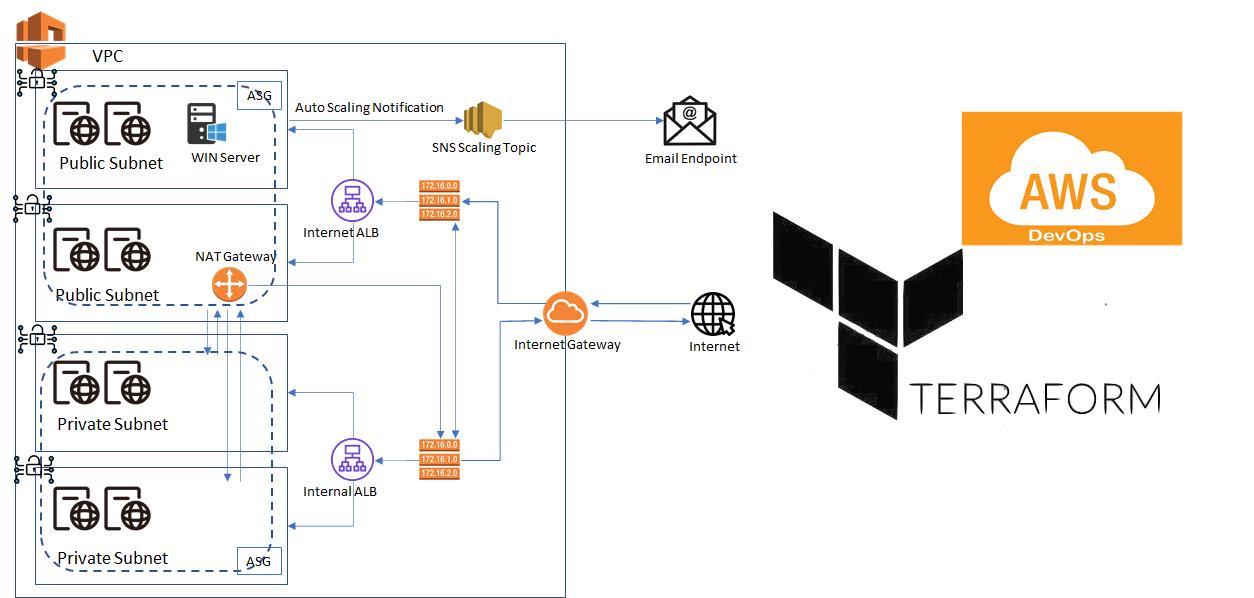
How to Deploy VPC & EC2 with Terraform
HashiCorp Terraform is an infrastructure as code tool that lets you define both cloud and on-prem resources in human-readable configuration files. Terraform’s primary function is to create, modify, and destroy infrastructure resources to match the desired state described in the Terraform configuration.
-
 Published on
How to Deploy VPC & EC2 with CloudFormation
AWS CloudFormation is an infrastructure as code service that enables you to model and provision AWS resources using declarative templates. CloudFormation’s primary function is to create, update, and manage infrastructure stacks so that the deployed environment consistently reflects the desired state defined in the template. It automates dependency handling, orchestrates resource lifecycles, and ensures predictable, repeatable deployments across your AWS environments.